Heritage Centre

The Heritage Cottage

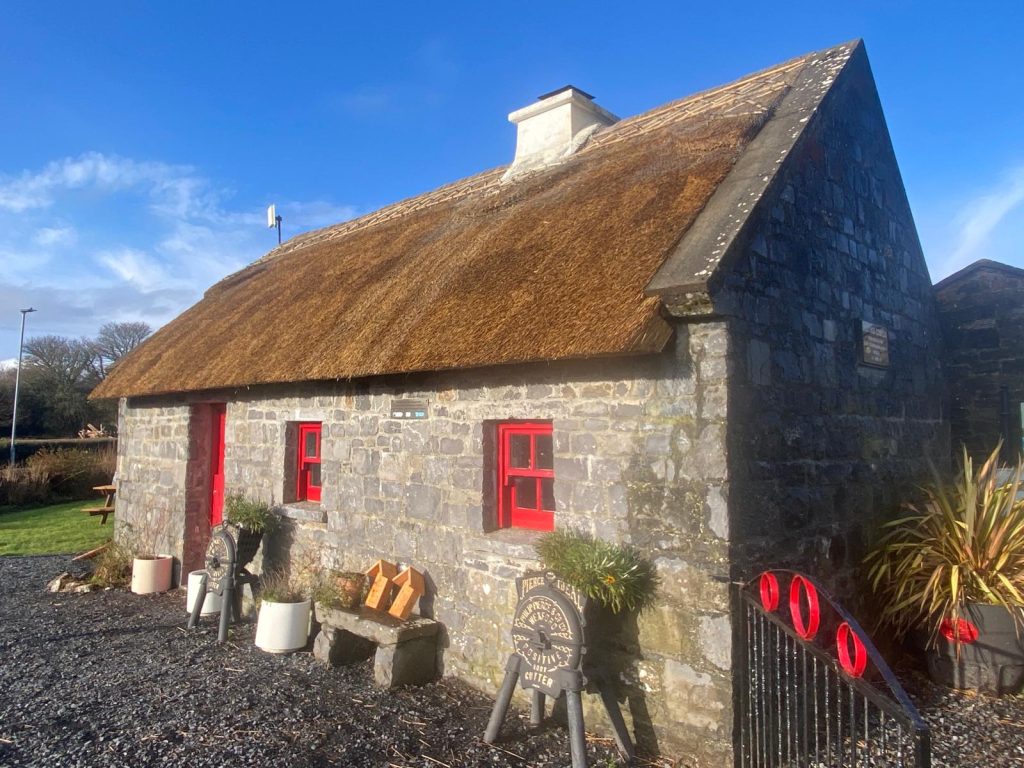
The cottage was built using local limestone and has been thatched using Turkish reeds. In the past, local phragmites reed would have been harvested from nearby wetland. This durable material was abundant and freely available, and had a working life of ten years or so, which could be extended if the reeds were soaked in hydrated copper sulphate.

Copper sulphate, or bluestone, is an effective fungicide that also kills many plants including harmful algae, prohibits effective root growth, and has powerful anti-microbial qualities. The use of bluestone to protect potato crops from potato blight (a major contributor to the Irish Famine) is now discouraged, as it leads to excessive copper residue in the soil.

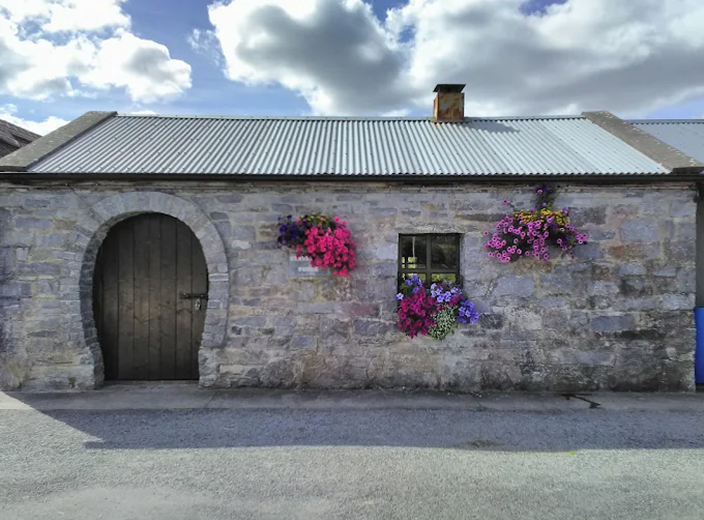
Those living in stone cottages like this soon learned that south facing walls grew warm in the heat of the sun and were great places to grow a few flowers. Cracked iron pots made great planters, and the fruit or flowers grown would add a touch of luxury to an otherwise spartan existence.

The traditional half-door allowed daylight and fresh air into the house whilst keeping hungry livestock out and crawling babies in. It also served as a comfortable leaning post for the inhabitants as they looked out on the day.

The cottage is constructed of local stone and features a traditional thatch.

While most traditional cottages would also have a back door, this model does not. The windows were kept small, for householders could barely afford to pay their basic rent, let alone the much despised window tax. From 1696, under the rule of British King William III, all homes were assessed for taxes by counting the number and size of windows, which could be measured from the outside without intruding into the dwelling. Poor people living on poor diets without adequate ventilation or clean water often developed highly contagious and lethal typhoid fever (Salmonella typhi), giving rise to the term ‘Typhoid tax’.

Opposite the front door of the cottage is the outshot, or the hag, where the old woman of the house would sleep. In some parts of the west a woman who lived longer than 70 years was deemed to be a witch and could not be buried on consecrated ground.

Since its official opening in July 2004 many visitors have been through the Heritage Cottage door.

It has also been the venue for community meetings and social occasions.

The Forge

The forge stands in the centre of Newtown next to the Heritage Cottage. It was in use until recently, and hopefully will be again. For now visitors can view it as it probably never was – free of smoke and straw, and quiet too, without the sound of hammering, horses, and old machinery.

The forge would have been an important focal point in the community. It was where horses were shod, where machinery and tools were made and repaired, and where local people would gather to discuss affairs of the day. Almost everybody would be dependent on the local blacksmith for everyday items.

There were a number of forges operating in the area. This one was in the ownership of the Staunton family for at least a hundred years and maybe much longer. The 1901 census lists Patrick Staunton as the local blacksmith. Patrick’s son Richard was also a blacksmith, and his own son John, who died in 1980, also worked as a ‘smith.

With Richard’s death the forge fell into disuse and disrepair. Restoration work was undertaken and thanks to the efforts of the local community and local employment schemes it is now a valuable heritage asset.

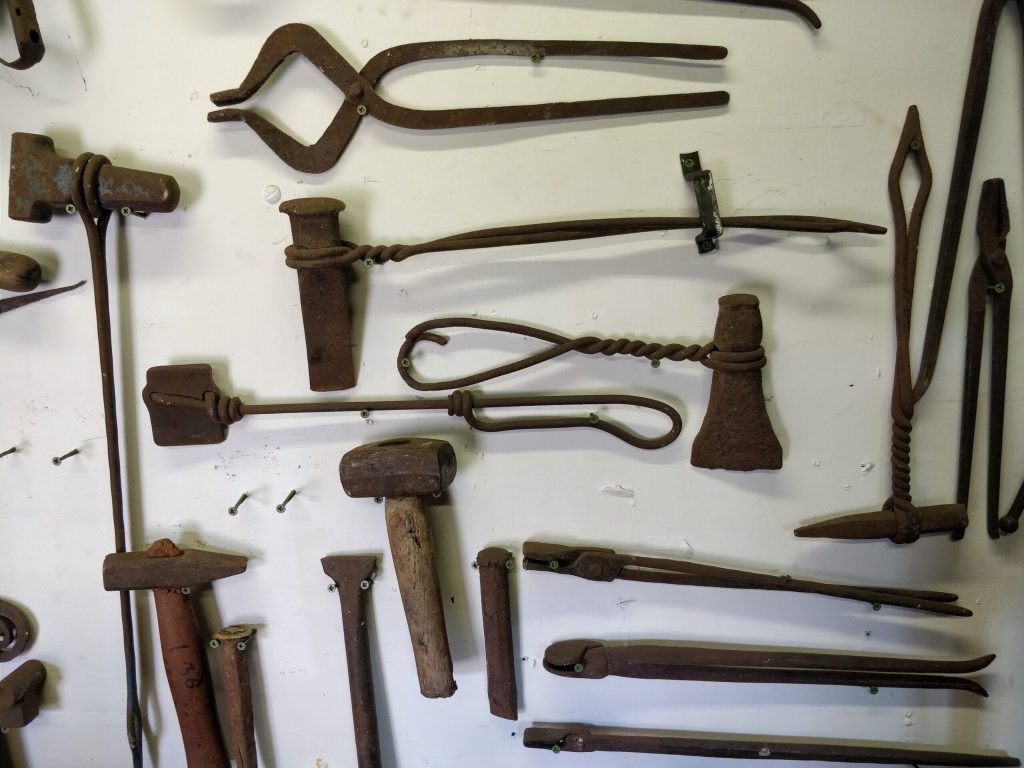
The forge contains a fine assortment of old tools, many of which were fashioned on site. Some of these remain as mystery objects. Perhaps you could shed some light on their purpose.

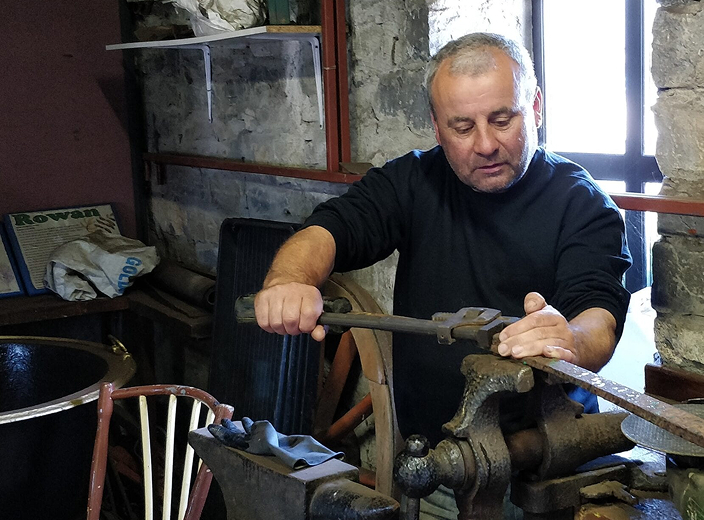
Using tools both old and new, Tommy McEveny works at restoring a vintage plough.
The blacksmith was a man skilled in his work, able to make a variety of tools as they were needed.

Newtown

Newtown is, or was, just that – a new town. It came into being when local landlord Major Andrew Crean-Lynch evicted numerous families from his estate in the first third of the 19th century. Those thrown out from their homes didn’t move far – just as far as this road junction, where they built a new community, a series of small cottages where they could restart their lives.

This small dwelling is typical of those built in Newtown. The roof would have been thatched, but the rest of the house is fairly original.

The Major later fell into financial difficulty and had to sell off his considerable landholding. Perhaps he had time to reflect on his past misdeeds; one would like to imagine that was so.

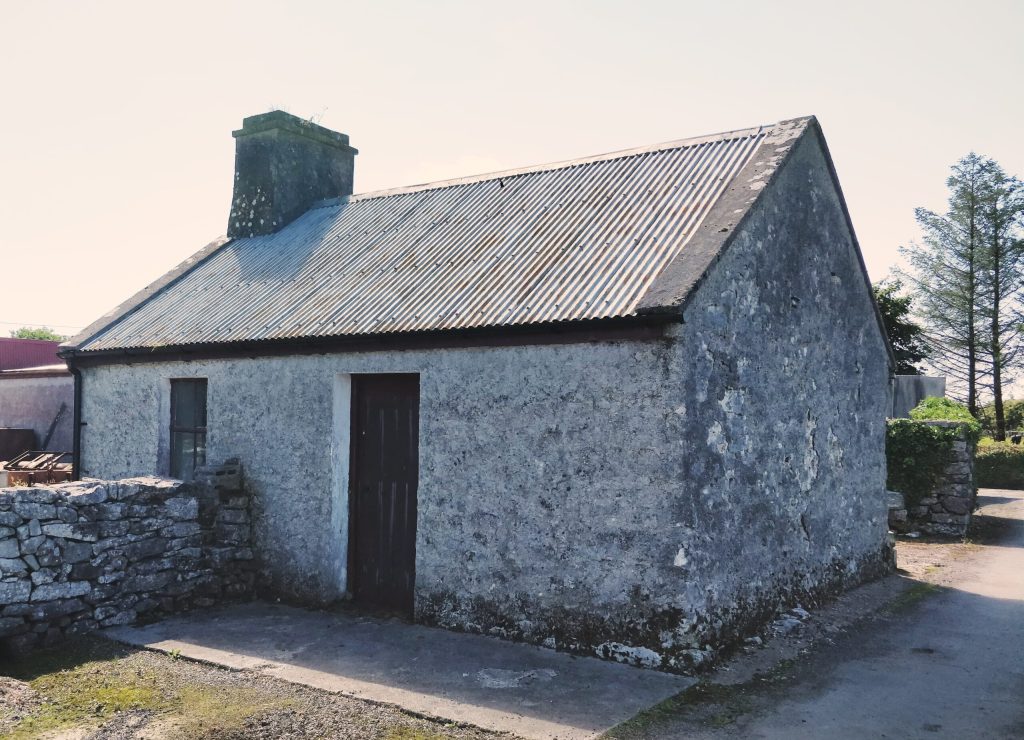
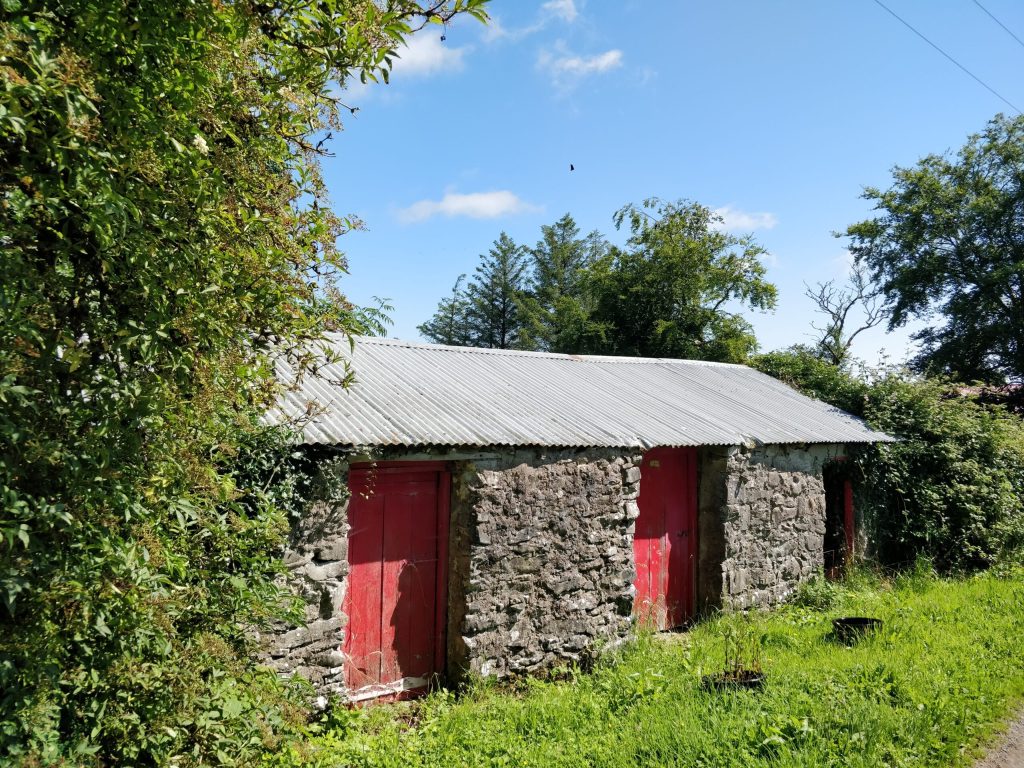
Some of the original Newtown buildings still stand. Local opinion is that this was always a shed, and probably so. The wider doorway would have allowed access for a small cart, such as would have been pulled by an ass.
On entering through the red half-door visitors are often struck by the capacious fireplace and the ‘hag’, a sleeping compartment close to the fire. There were no proper bedrooms in most of the old labourer’s cottages, although this one does have a small room at the end of the main room. It also has a mezzanine, an upstairs and open sleeping area. The mezzanine was more commonly found on cottages built on better land, especially in the more southern counties of Limerick and Clare.
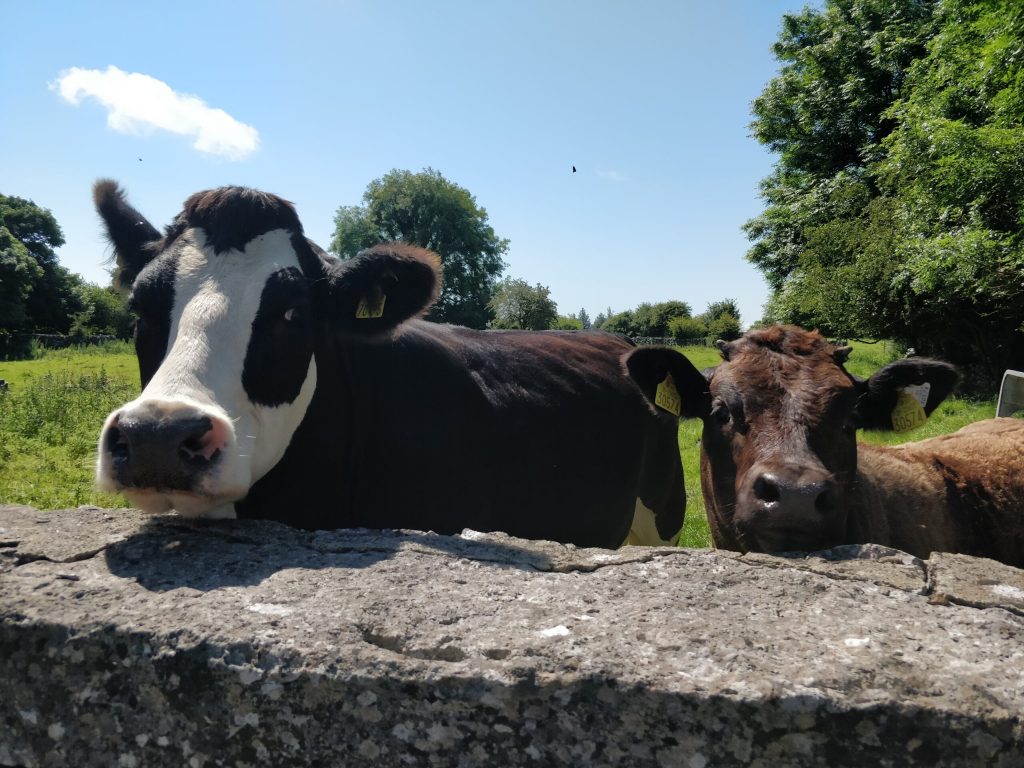
Traditional cattle breeds have been replaced by better performing types. Here, a Hereford/ Friesian cow and her continental cross calf take an interest in passers by.

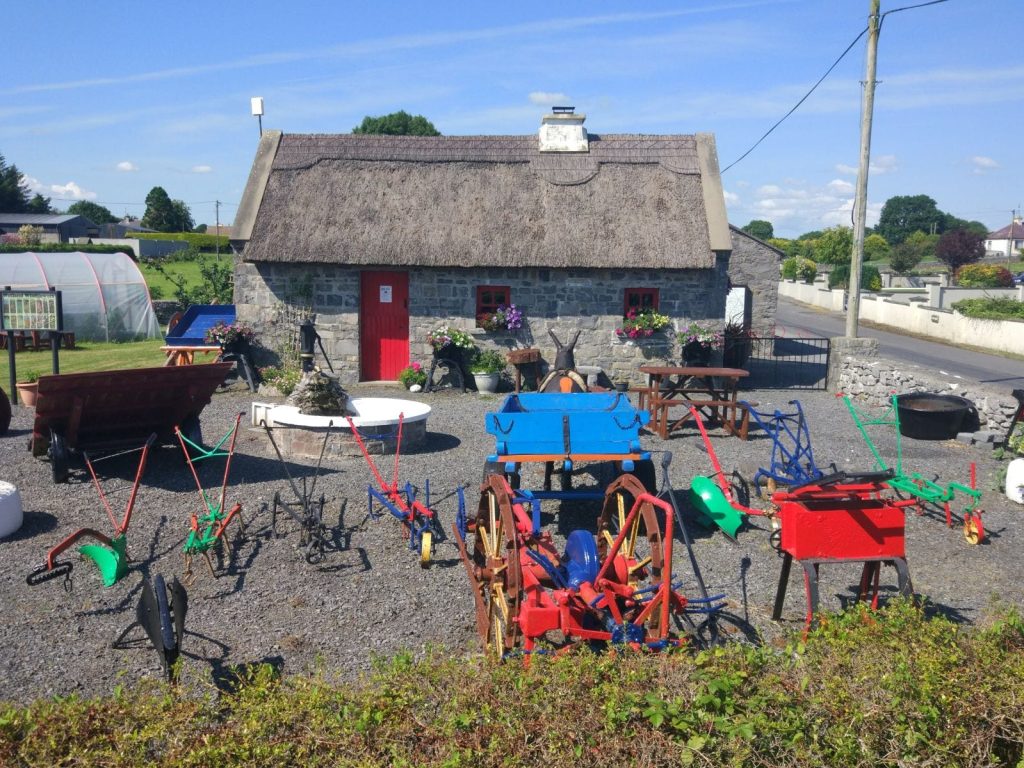
In the centre of Newtown stands the cottage and forge that have become our visitor centre. The 18th century style cottage, which now serves as a mini-museum, was built from scratch in 1993, by workers on the local Community Employment Scheme on land donated by Mrs. B. Cosgrave and her family.

Clogher Heritage Centre

Clogher House

Set in its 640 acres of quality farmland and forestry Clogher Lynch, as it was originally known, is a fine, Georgian, three storey mansion that was built in 1770, complete with its own library and chapel.

The Lynches were popular landlords. The last of the family, Marcella, married Major Crean from Hollybrook in the 1840’s, a taciturn and ruthless landlord who was hated by his tenants.

In January 1829, on the Night of the Big Wind, the house was damaged in a ferocious storm and was left roofless.

This disaster came as a blessing in disguise, giving the Creans opportunity to remodel their property. They added another storey to the house and had it roofed with more modern slates.

Helena Mary Crean, who inherited the estate from her father, was to marry James Fitzgerald Kenny of Kiltyclogher in Co. Galway around 1870. He died after only seven years of marriage.

The Fitzgerald Kennys had five children. Master Harry, as the eldest, Henry, was known, inherited the house and estate. Having been orphaned at an early age he grew up wild and conceited, with a love of horses, hunting and racing.

On his way home from the Ballinrobe races Master Harry called into Higgin’s public house in Carnacon, where he met up with Captain Blake (from nearby Towerhill House) who was drinking with friends.

After several rounds of drinks Captain Blake asked Master Harry if he would allow his eldest sister marry him. Master Harry thought little of the idea as he regarded the Blakes to be of lower class than himself.

Master Harry was attacked by Blake’s companions but following the intervention of Blake he was persuaded to return home. Two hours later 23-year-old Master Harry was found dead in suspicious circumstances. The cause of his death was never established. Some say he simply fell from his horse, while others maintain his demise was related to the incident earlier in Carnacon.

He liked to help his neighbours out when possible and loved to argue the toss with them. He was held in high regard by all.

On one occasion a man was fined £25 for stealing timber from his estate. When Kenny heard of this he had the case quashed.

Clogher House

On another occasion some locals were brought before Castlebar District Court for stealing firewood from Land Commission property. Despite not having been solicited Fitzgerald Kenny appealed to the Justice on their behalf and had the case dismissed.

Master James was elected to Dail Eireann as a Cumann na nGaedheal (Society of the gaels – a political party born at the foundation of the Irish Free State) candidate in 1927 and was appointed Minister for Justice when then Minister Kevin O’Higgins was shot. Delighted with his victory, he threw a big celebration which, much to his dismay, turned into a drunken brawl.

After his re-election later that same year he held another big party to the surprise of many. Fitzgerald Kenny was to spend 16 years as a public representative from 1927 to 1943, when he was replaced by Joe Blowick from Belcarra. Blowick would later became Minister for Lands.

James Fitzgerald Kenny died in 1956. He is buried in the family plot in Drum Graveyard. Though Fitzgerald Kenny was perceived to be well off, on his death his liquid assets were few. All his wealth was in property.

Clogher House and the estate were sold to a timber merchant in the late 1960’s. In 1970, the house caught fire and was burned down, bringing down the curtain on this Romantic period of local history.

The Land Commission took over the estate and it was divided locally.

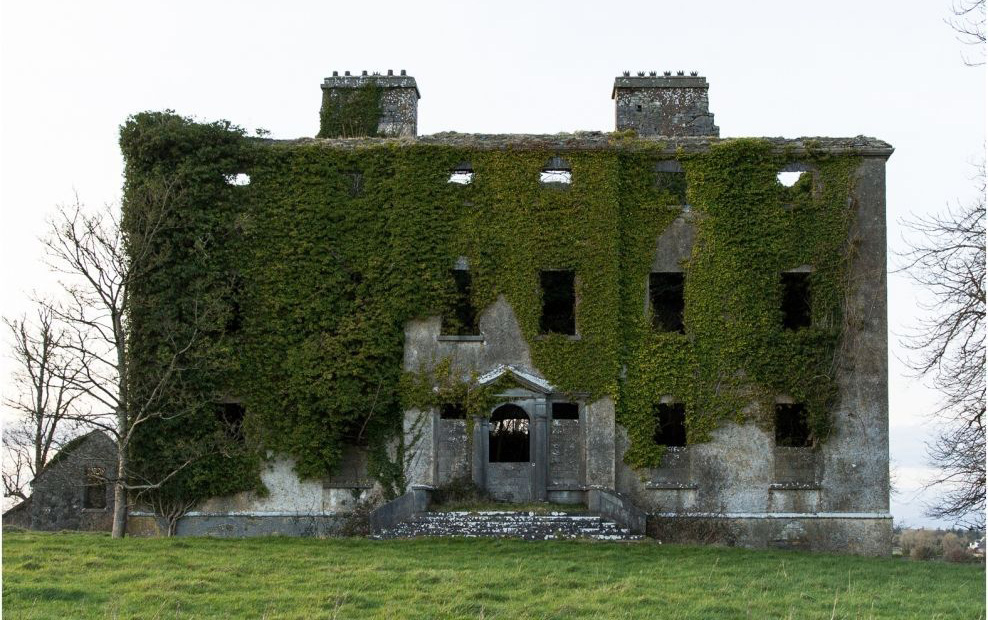
Today Clogher House stands an empty shell, inhabited only by bats and birds as history fades into folklore.

Getting to the Heritage Centre

By Air
Ireland West Airport Knock Co Mayo. For full details please see www.irelandwestairport.com

By Rail
Daily services from Dublin to Claremorris, Manulla, Castlebar and Westport Station timetable details on www.irishrail.ie

By Bus
Bus Eireann offers daily service to nearly all major towns in Mayo with daily services to Claremorris, Westport,Castlebar and stopping at the village of Balla. Timetable information on www.buseireann.ie www.buseireann.ie

By Car
From Dublin take M50 and exit onto M4 Sligo/Galway and then exit on M6 to Galway and exit N60 to Roscommon to bring you to Claremorris and onto Castlebar. Start of the trail in village of Balla on N60 between Claremorris and Castlebar. Or alternativly stay on M6 and exit at Junction 18 Sligo and follow signs for Claremorris and onto Castlebar.